FAD: Foundation-Model Aided Deep Learning for Marine Seismic Interference Attenuation
Foundation-model-aided deep learning for marine seismic interference attenuation, recorded as accepted by Geophysics on the official PKU faculty profile.
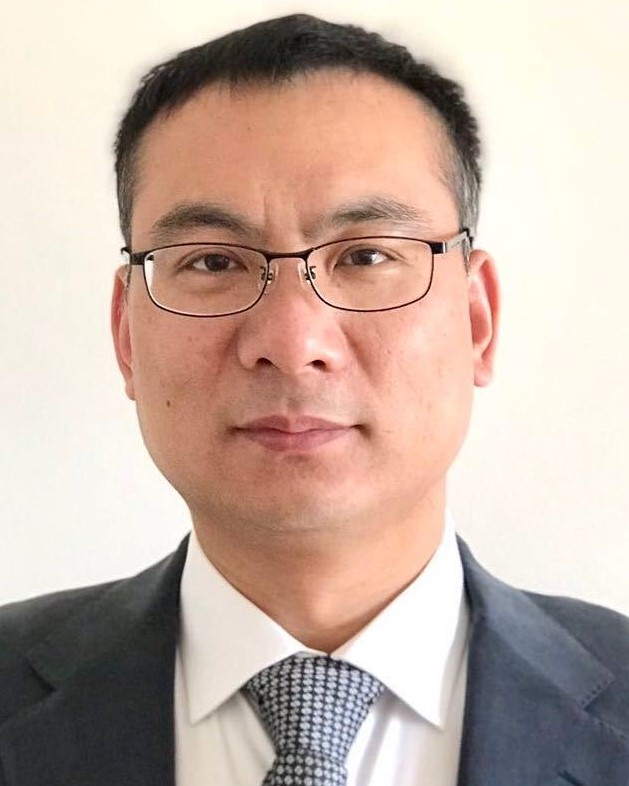
刘马
GeoBrain · People
Team Leader
Boya Distinguished Professor at Peking University and Director of the Center for Artificial Intelligence Geoscience, working across exploration geophysics, applied mathematics and AI.
School of Earth and Space Sciences / Institute for Artificial Intelligence, Peking University
Verified work
Foundation-model-aided deep learning for marine seismic interference attenuation, recorded as accepted by Geophysics on the official PKU faculty profile.
A domain-adaptation framework that freezes feature encoders and searches decision boundaries for efficiency and interpretability.
A geometry-aware transformer that injects acquisition geometry into prestack seismic representations for robust 5D first-arrival picking.
Gaussian generative modeling of client heterogeneity with dual-scale fusion for personalized federated learning.
A systematic framework for constructing analyzable multiclass robust losses from univariate base functions under label noise.
A spectral convolutional neural-network approach to coherent ground-roll attenuation, currently recorded as revised.
A parameter-efficient velocity-model-building workflow combining attention gates and enhanced LoRA to adapt multimodal initial velocity, RTM and sparse well information.
A review of the hierarchy, development workflow, applications and challenges of foundation models for exploration geophysics, including agents and copilots.
An interpolation-inspired self-supervised formulation for seismic deblending that learns interference-attenuation representations without complete labels.
MCP server suites expose SPECFEM 2D, 3D Cartesian and 3D Globe parameter, meshing, solver and visualization workflows to automated and human-in-the-loop agents.
A diffusion-probabilistic approach that learns seismic data distributions for generative missing-trace interpolation.
A hybrid-cascade multi-view stereo network that decouples feature resolution from depth intervals and uses probability sampling for accurate, complete 3D reconstruction.
A physics-informed adversarial formulation that updates velocity models through an acoustic-wave-equation generator.
Three strategies for embedding geological and geophysical prior constraints into data, neural layers and learning objectives.
A broad review of deep learning across exploration geophysics, seismology and remote sensing, with challenges and future directions.
A systematic study of supervised deep learning for seismic denoising and the role of data and label quality.
A fully convolutional mapping from multishot seismic records to velocity models for rapid next-generation model building.
Adaptive tight-frame filters learned from the current estimate for sparse restoration of missing seismic traces.
A low-rank matrix-completion formulation for reconstructing sparsely and incompletely sampled seismic traces.
A review of the multiscale, multidirectional curvelet transform and its applications in imaging and scientific computing.